
Introduction
Group consultation has been developed as a way of economizing as much as possible on time and effort in Bible translation consultation. We see this as part of the ongoing quest to think innovatively about Bible translation consultation. It has also proven to be a very effective way of mentoring members of translation teams at every level including translators, exegetical advisors, national consultants, and church leaders.
The shortage of consultants is critical in most Bible agencies and a bottleneck exists in consultant checking. There are over 31,000 verses in the Bible, and if a consultant checked at a rate of 100 verses per day in a particular language team, it would take 311 days to check every verse. If the consultant did 100 days per year of consultant checking, this would take three years to check the whole Bible verse by verse in one language. If the consultant worked for 30 years, they could check ten complete Bibles in their lifetime. But as I will show in this paper, by group checking, the consultant can multiply their efforts tenfold or more—possibly doing 50 to 100 Bibles in their lifetime, as well as training and mentoring many consultants in training (CITs), exegetes, and translators in the process.
In the context of group consultations, consultants become more like facilitators and trainers rather than examiners of text. Consultants seek to empower all members of a translation team to grow in their capacity to produce quality translations.
The Start of Group Consultation
As far as can be ascertained, TWFTW, working in partnership with Pioneer Bible Translators (PBT) in Tanzania, pioneered this approach. I provided much of the leadership in this effort/project? As we had grouped together six languages in a cluster project, they were all ready to have the Gospel of Mark checked. The idea was to try to do consultant checking in all of them simultaneously using Paratext. Well-trained exegetes had already checked the book in each of the languages and the translators had received four weeks of training in principles and process of translation. The books had also been reviewed by trained reviewers and tested in the community.
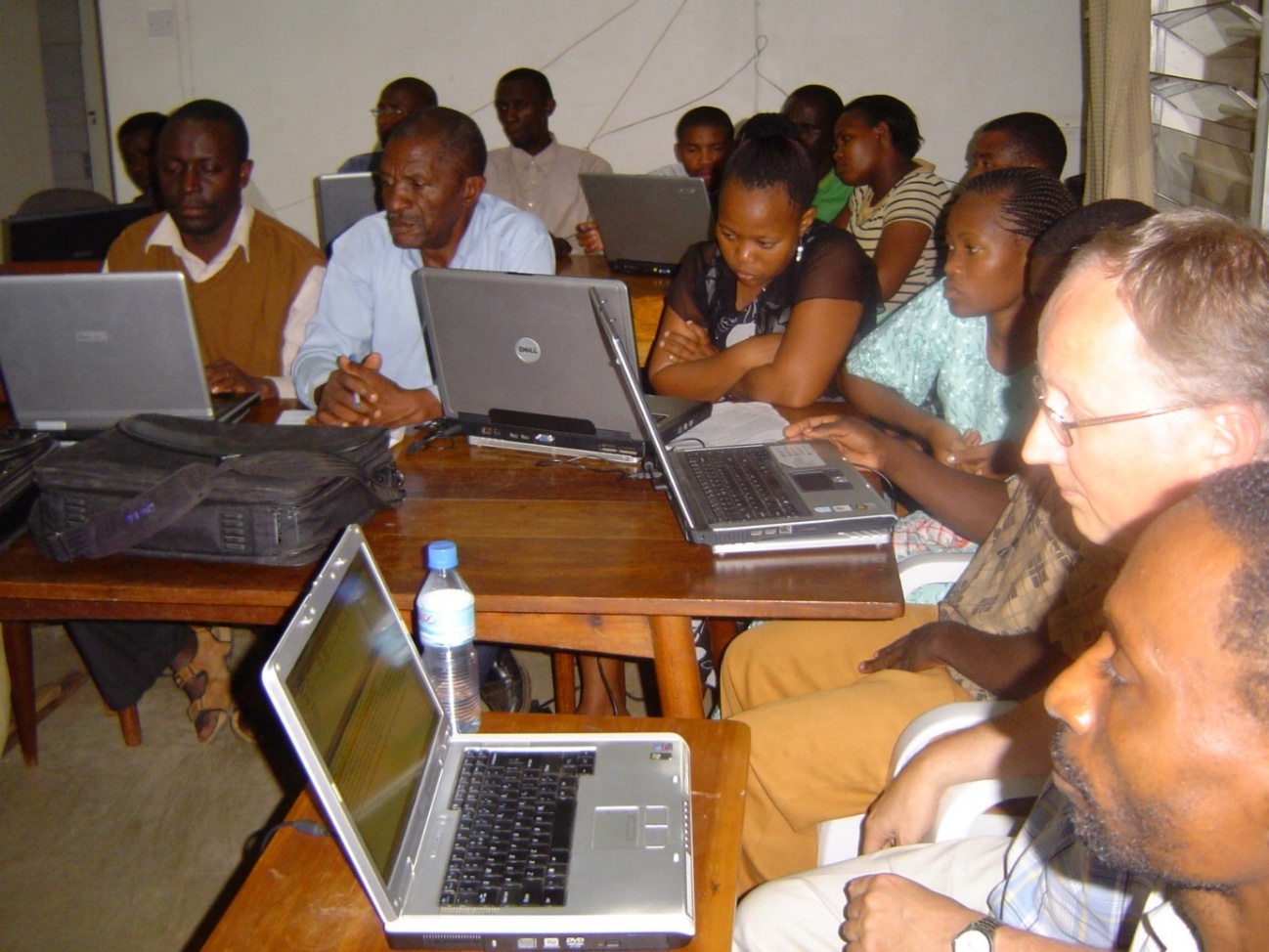
The first group consultation was held in 2007. It evolved from six translation teams to eight teams, consulted by Du Toit van der Merwe, one of the guest consultants working with TWFTW. Later TWFTW’s International Director of Translations, Dr Manie van den Heever, implemented the approach working with six teams in the Democratic Republic of Congo in 2009. He also worked for eight months in Tanzania doing group consultation of several NT books in the same cluster of languages previously mentioned.
Dr Reinier de Blois of UBS also did a group consultation on the Gospel of John in four languages in Tanzania in which TWFTW and Pioneer Bible translators were partnering together and found the process to be generally beneficial.
The Procedure for Group Consultation
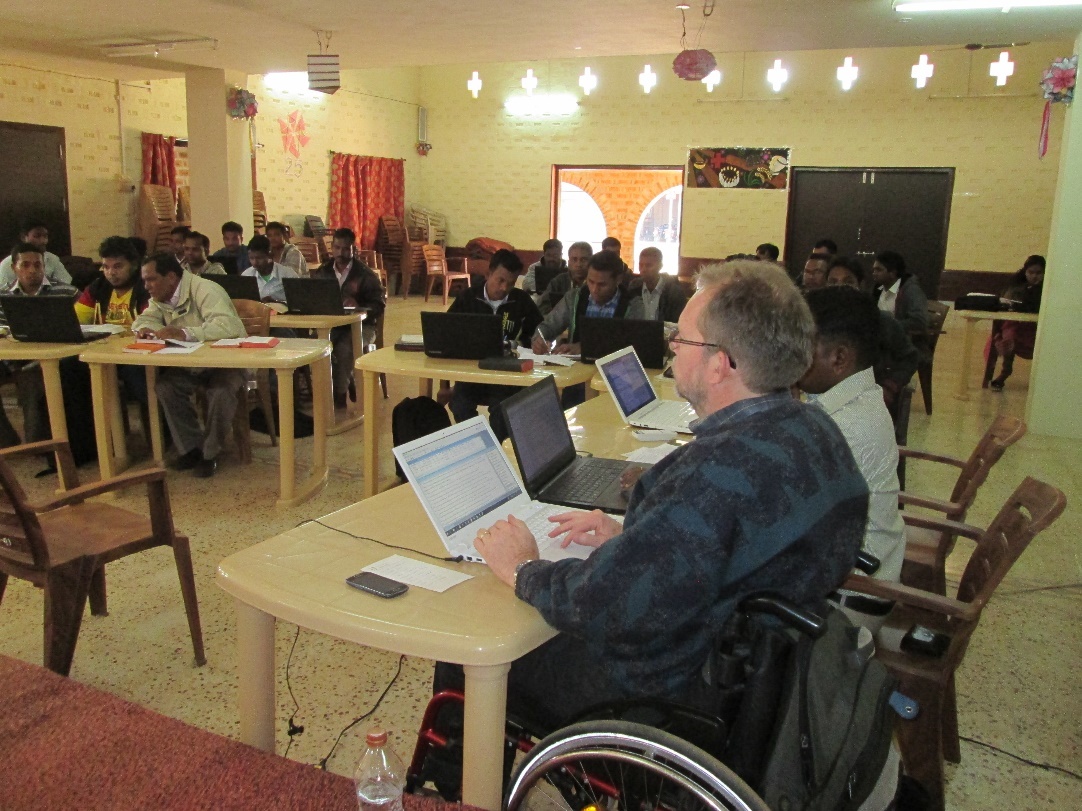
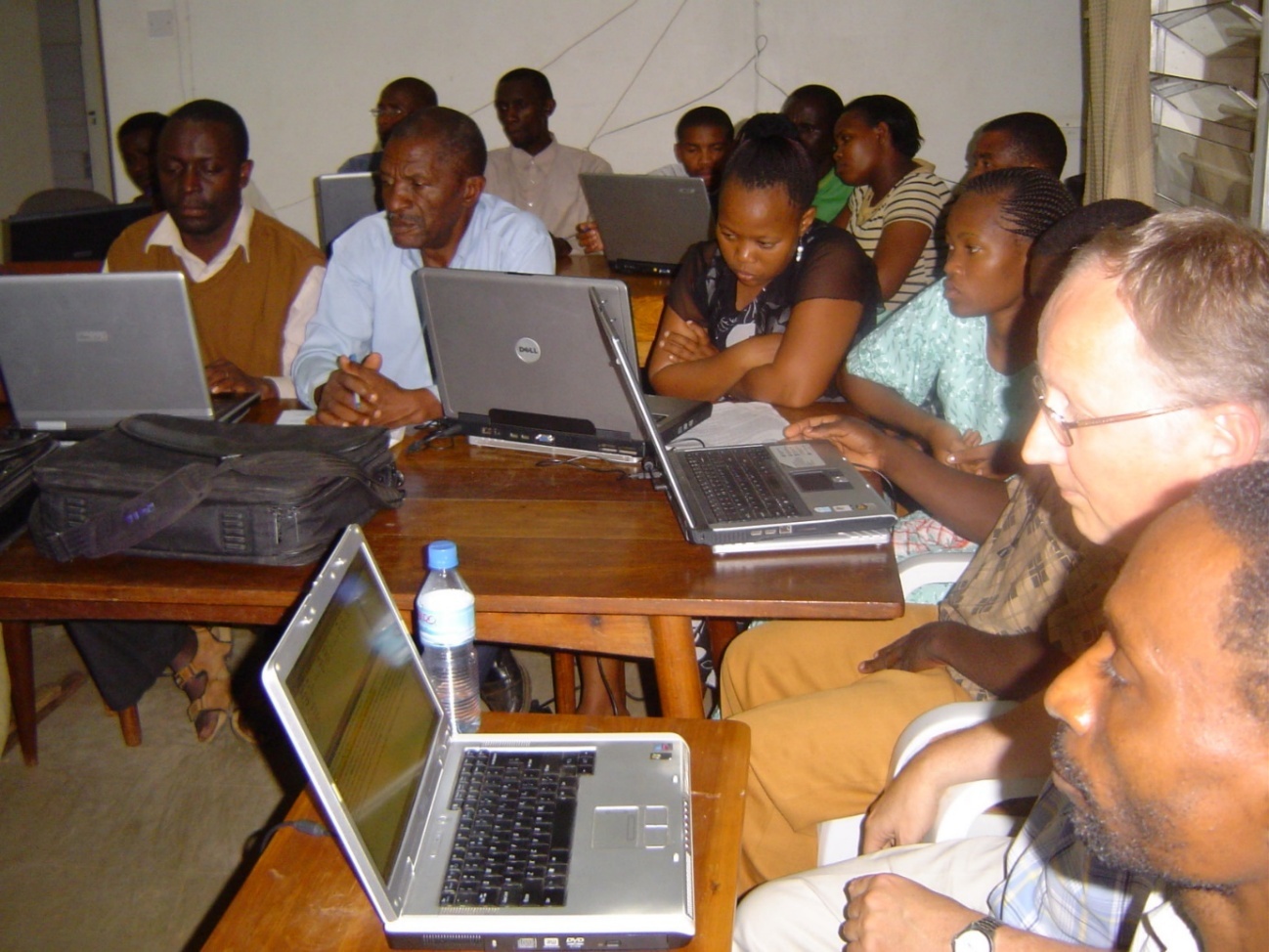
Group consultation is suited to cluster projects where a group of translation teams (e.g., two to twelve teams representing different, but closely related languages), all have their work consultant checked simultaneously verse by verse by one or more consultants in one room. The consultant is usually assisted by other consultants in training (CITs) and exegetes.
Each team takes a turn to lead a session and to read aloud their translation of the passage that is being checked. They read the verse first in their language and then do an oral back translation, in much the same manner as they would when a consultant traditionally checks a translation with one team. The other teams follow along in their own translations to assess the accuracy and quality of their own translation of the verse. Once the consultant has checked and then corrected or commented on the verse, they assess the written back translations of each language against the biblical source texts using the Scripture text collection in Paratext. As the languages are arranged under each other line by line, it is easy to see where there are differences between the various languages.
If any problems are detected in the translations of the other teams, questions will be asked by the consultant. Sometimes the team will be asked to give an oral back translation of the verse to gain further clarity. Suggestions will be given to help them “correct” their versions. Consultants are assumed to have the necessary knowledge of the original text and adequate experience of potential translation problems to enable them to ask relevant questions of the translation teams to assess accuracy, meaningfulness, and naturalness.
When one passage, usually a chapter, has been thoroughly checked, the next passage is tackled with a different translation team reading their translation. Each team needs to assess whether they need to make any changes to their text. One avoids pressure to make changes if there is reluctance and understands that each language will have different ways of expressing the same meaning.
The teams usually sit together with one laptop open and constantly evaluate their translation in the light of the discussions of the consultant and the other teams. One translator makes the required changes to their work on their laptop while another makes notes on the hard copy of their translation which is being checked. They make notes of areas which need more work, e.g., restructuring of their text or further research for a more appropriate term. These issues will be tackled by the team after the consultation. Each team has a chance to do an oral back translation of a chapter while the other teams listen, check, and update their translations as required.
Each exegete takes responsibility for a team (or two or three teams when checking up to twelve languages simultaneously) to ensure the teams have understood the concepts and made needed changes. The exegete also takes notes in order to be able to follow up on changes that have been made.
The consultant doing this type of work needs to have sufficient exposure to the target languages in question, otherwise it is difficult to keep up. It is helpful to work with a team of consultants and it is good to have a more senior consultant working together with less experienced consultants in this context as a training experience. Through this approach, exegetes also receive more exposure and training, as their skills are being improved as well.
Dr Reinier de Blois, a UBS consultant who participated in January 2008 in a group checking of the Gospel of John in four Tanzanian languages described the organization and his personal involvement and strategies used in the group session:
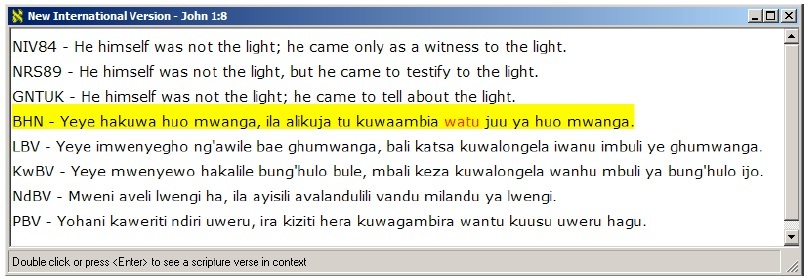
This is how the checking session was set up. Each team was present with three translators. Each team had at least one computer with them. The three exegetes working with these teams were there as well, including the coordinator of TWFTW and myself. A total of 17 people. A data projector displayed all four languages (in Paratext) on the wall, so everyone could see the four languages at a glance. I myself used SLT with all four languages in one scripture collection. This is even more practical than Paratext because you see every verse as a separate unit so you can easily spot if a verse in one translation is considerably longer or shorter than the corresponding verse in the other translations, as can be seen below.
We started checking John. The four teams took turns doing the back translation. One chapter for each team. The other teams listened carefully while comparing their own translation with the other three.
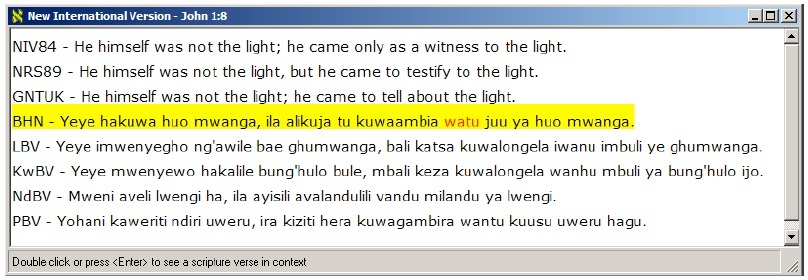
After the back translation was given, I asked for input from the floor. Especially the three exegetes gave a lot of feedback, but also the other translators commented on the work of their colleagues in the other languages. It was interesting to see how some of the translators spontaneously started correcting their own translations after seeing the work of their colleagues. The problem is that they have the tendency to borrow heavily from Swahili thinking that their own language does not have the right equivalent for a particular word. However, as soon as they see how some of the other languages have rendered a particular term in a more idiomatic way than they have, they decide to adopt a similar strategy. So even if I would not have given my own input, this way of working would already have been very beneficial for each of the four projects.
Of course, I did give my own input as well. Let me explain my basic strategy.
-
First, I compared the length of the four translations. This gave me important clues as to the completeness of each of the four verses (see screenshot above).
-
Secondly, I compared the phrase structure of the four. This helped me identify the different elements of the sentence. If three translations have a similar phrase structure and the fourth is different you know you have to look closer at number four.
-
The third step is to identify and compare the key terms in each verse. Once you have identified the key terms in a verse (like the word for “light” in this particular case), it is relatively easy to understand the way the translation is structured. And what you do not understand you simply ask…. Working like this gets easier after every verse.
-
And finally, of course, as a consultant, knowing the pitfalls in each particular verse, you ask the standard questions. It does not make much difference whether you ask them for one language or for four.
Preconditions for Group Consultations
Group consultations work when the languages in the different projects belong to a cluster, that is, they are linguistically and/or culturally similar. The translation teams also need to be working on the same books at the same time in readiness for consultation. It is assumed the teams are using the same process of Bible translation. After drafting, team checking takes place, followed by exegetical checking done by an exegetical advisor. The text then needs to be checked by a team of reviewers and also tested in the community before the group consultation takes place.
The translation approach (e.g., Literary Functional Equivalence) of all the teams needs to be the same. It is also helpful if all the teams are working from the same source text or texts.
Advantages of Group Checking
1. Great economizing in time and effort. The arithmetic is easy: rather than a consultant spending the time and effort required for a consultation as many times over again as there are teams to be worked with, the consultant spends that time and effort once, with all the teams together.
2. Benefits are derived from the input from different teams working on languages that are related. As in any group discussion, answers to questions are often obtained before the questions are asked by listening to the responses of others.
3. Working in a group seems to provide stimulation and motivation to all the translators. There is a healthy sense of competition in terms of quality of work produced. There is a good cross-pollination of ideas for key Biblical terms and descriptive phrases for foreign or unknown ideas in the Bible. All teams are eager to be ready for the consultation events as they do not want to be left behind.
4. A well-translated verse is “showcased” to others which brings a greater sense of pride in work done and such model verses can also be implemented by the other groups.
5. Group consultations also provide good training opportunities, not only for translators, but also for exegetes and CITs. Hence we are finding from one consultation to the next, the quality of work is steadily improving in all the teams. A consultant can easily miss an error in the text, but with several eyes joining in, problems which may otherwise have been overlooked can be picked up.
Andy Ring’s paper in BT2017 confirms many of these advantages especially in the area of training translators and CITs. He mentions significant spiritual, technical, and social impact on the all participating teams and states: “The usefulness of a multiple language checking setting for training CiTs and enhancing the translation skills of mother tongue translators cannot be overstated.”
Disadvantages
A possible disadvantage may be that the attention of the consultant is divided among the teams. This may lead to less diligent checking. There may be a tendency for all teams to follow a suggestion, which may not be the best solution for their language. What they had may have been a better rendering, but group pressure may have led them to change it. We always encourage teams to ensure they retain the naturalness of their own language and expressions and only make changes if their text needs to be corrected or improved. If they are unsure, time is always given to answer any questions they might have. The advantages noted above probably outweigh these possible disadvantages. Additionally, if procedures are adapted to the situation of simultaneous consultation, the risk of diminished diligence may be completely avoided.
Tracking Progress of Group Checking in Africa Since 2007
TWFTW started working in Morogoro, Tanzania in partnership with PBT (Pioneer Bible Translators) in 2004. We started with one project in the first year: Lughuru. We added another five in 2005: Kwere, Pogolo, Ndamba, Nguu, and Zigua. In 2006 we added another four: Vidunda, Kutu, Ngindo, and Makua.
All teams were trained with our four-year Diploma in Bible translation, which is an on-the-job training programme. They start with Principles of Bible Translation in year one after which they begin their first drafts. All ten projects were consultant checked using group consultation.
We did simultaneous checking in Morogoro of the following books:
-
April 2007: Mark into 6 languages (van de Merwe & Funnell)
-
December 2007: Luke into 7 languages (van de Merwe & Funnell)
-
January 2008: John into 4 languages (de Blois)
-
August 2008: John into 6 languages (van de Merwe & Funnell)
-
November 2008: Matthew into 8 languages (van de Merwe & Funnell)
-
August 2009: Acts into 8 languages (van de Merwe & Funnell)
-
March 2010: Galatians into 7 languages and Ephesians into 6 languages (van der Heever), Romans into 10 languages (Willits)
-
November 2010: 1 & 2 Corinthians into 8 languages (Funnell & Kamande)
As can be seen from this, due to various issues, not all teams were able to be in every group consultation. However, any teams that were unable to attend the consultation of a book joined the consultation with other teams later. Without going into further detail about consultation events, all ten groups had printed New Testaments by 2016, a timescale of under 10 years from the start of the projects. Several different consultants participated in these group consultations, each one bringing their own experience and expertise to enhance the quality of these translations and help train CITs.
In 2010, TWFTW and PBT decided to dissolve their partnership and separate their projects in Tanzania. TWFTW now has seven of the original ten NT projects, and good progress is being made on the Old Testaments which are 68% group consultant checked as at December 2022.
A new cluster project of five languages: Ngoni, Ndendeule, Matengo, Mpoto, and Yao was started in 2012. The Ngoni and Yao have published their New Testaments and the Ndendeule, Matengo, and Mpoto have now finished consultant checking 80% of NT books. This has been done in under nine years. A new cluster of four languages has been started for the Ndwewe, Mbunga, Benamanga, and Bondei languages which have 50% of the NT group consultant checked. TWFTW is currently running 23 projects in Tanzania that are all being checked using group checking. Two Tanzanian consultants have also been trained by TWFTW during the process of group checking, and there are currently four CITs. PBT are still doing group checking in Tanzania with their consultants Brad Willits and Martha Wade.
TWFTW currently has 28 projects in Ethiopia. Only consultants from TWFTW have done group consultation in Ethiopia. Three of these (Alemu, Tamene, and Tessema) and five from South Africa (myself, Antionette van der Meulen, Nel Claassens, and Manie van der Heever) are involved in group consultations. At least so far, consultants from other entities feel more comfortable with checking one language at a time.
The Melo, Oyda, Konta, Yemsa, and Baha (pseudonym teams have had several books group checked as have the Qena, Meqa, and Maro teams. The Gayil and Baiso teams did most of the books with group consultation because their projects started at the same time. The Awngi and Sheko teams often joined them.
The Melo, Oyda, Konta, Yemsa, and Baha NTs were published in 2020.
The Awngi, Baiso, Gayil, and Sheko NT translations were published in Dec 2022. The Basketo started with the OT and have published portions. In total, 15 NTs have been published in Ethiopia.
TWFTW has a cluster project of three languages in Zimbabwe (Kalanga, Korekore, and Nambya) and a cluster of three languages in Zambia (Nkangala, Luyana, and Bwile) that are doing well using group checking.
Progress in Asia Since 2010 With Group Checking
TWFTW did their first group consultation on the Gospel of Mark in ten languages in Orissa in October 2015. The teams had been trained in principles of Bible translation in September 2014. The Gospels in all ten languages had been checked in group consultations by February 2017. By the end of May 2018, Corinthians, Thessalonians, and Philemon had been checked. During these sessions five CITs were mentored. All ten NTs were published in May, 2020. From the start of training to the completion of the ten NTs, the translation took five years, nine months. Two CIT Oriya speakers were fully trained to consultant level.
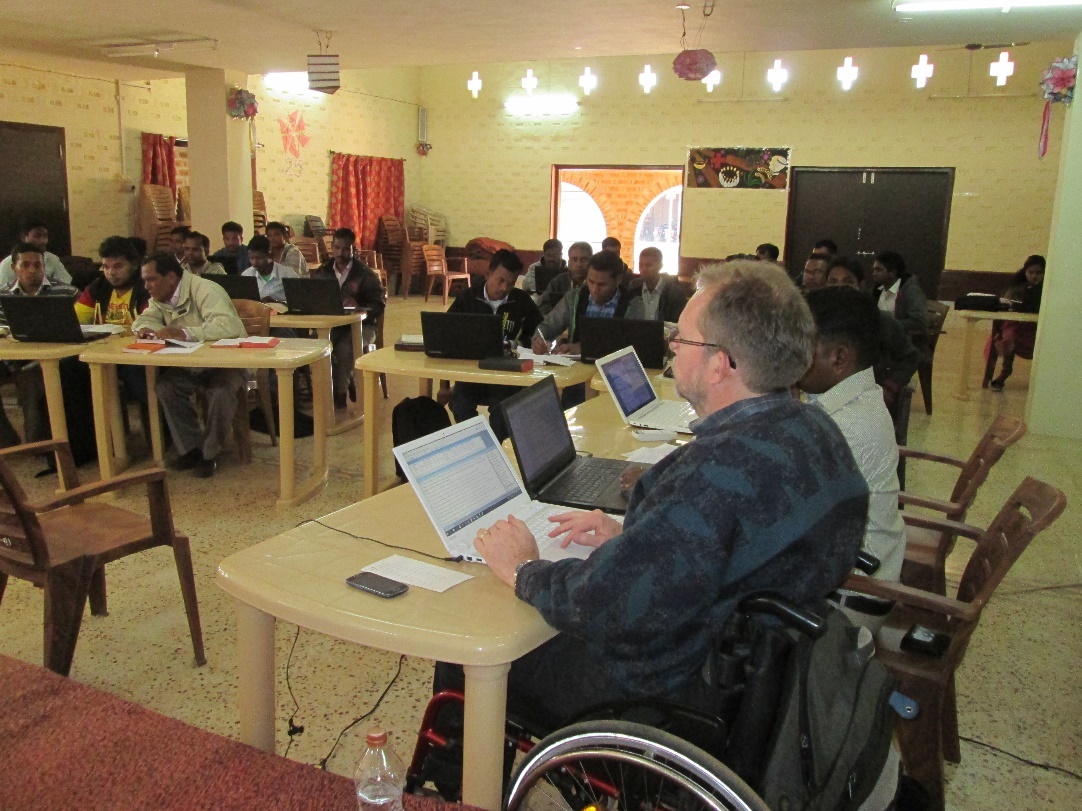
In the Nagpur region, TWFTW has six languages in a cluster project. From training in February 2015, Mark was group checked in six languages in April 2016, 76% of the NT was completed by July 2019, and the six NTs were completed and available by May 2020. This means all was accomplished is just over five years. Two CIT Marathi speakers were also fully trained to national consultant level.
Since 2010, TWFTW has also trained CITs of NLCI to become consultants through the process of group checking. During that time, the Shekawati, Dundari, and Mewari NTs were published and launched by NLCI in August 2021. The Malayalam cluster of six languages were group checked by TWFTW and published in 2020. NLCI continues to successfully do group checking in most of their projects.
New Opportunities/Experiments for Eten Innovations Lab (Tanzania and Nigeria)
In 2010 I worked with CIT Dr Kamande in Tanzania with group consulting on 1 and 2 Corinthians. He then visited Tanzania in March 2019, where I mentored him to the level of international consultant with TWFTW. Group checking was done on the book of Exodus in Ngoni and Yao in March 2020. Dr Kamande was also trained in mentoring of the other CITs, Raymond Seka Bigwa and John Mbeyale.
In April, 2021, due to Covid restrictions on travel, Dr Kamande broke new ground by checking 1 Chronicles in seven languages in Tanzania (Lugulu, Makua, Ndamba, Ngindo, Nguu, Pogolo, and Zigua) via Zoom. Local consultants, Raymond Seka Bigwa and John Mbeyale, assisted Kamande. As all seven teams gathered in one room in Morogoro, an amplification system was used to make Kamande’s comments audible to everyone, with the leading team giving the back translation for Kamande to work directly with them. His comments and those of the teams were amplified to the other six teams in the room. All the back translations and discussions were done in Swahili, saving much time as all these particular translators are more proficient in Swahili than in English. Dr Kamande did another successful online checking via Zoom on 2 Chronicles, again with the seven teams of the Morogoro cluster present, in August 2021.
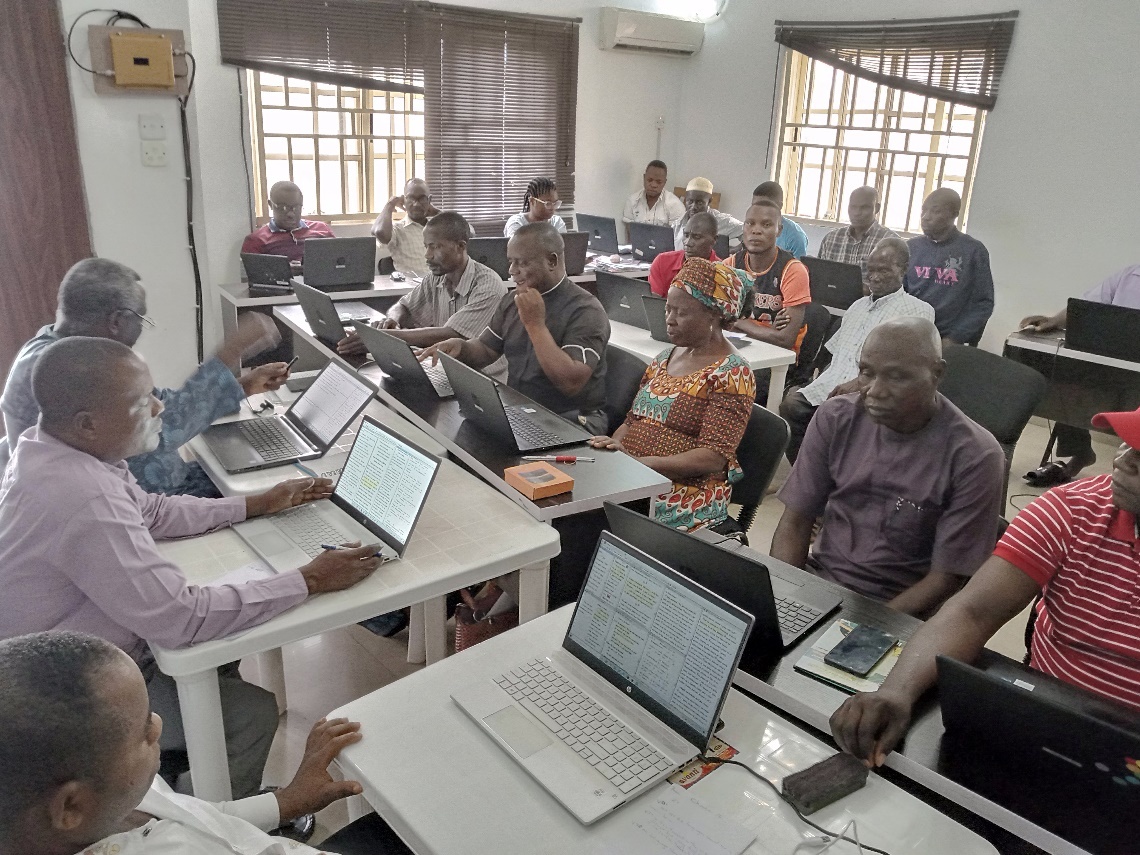
On another front, in Nigeria, TWFTW has four cluster projects in partnership with Wycliffe USA. The Genaat cluster has five languages, namely: Gwandara, Eloyi, Numana, Arum, and Alago. Similarly, the Abbun cluster has five languages: the Ashen, Basa, Buh, Ushama, and Ngwoi . The last two clusters are the Taraba cluster which has four languages (Kambu, Kaka, Wanu, and Mashi) and the Bankolam cluster, which has five languages (Bandawa, Lama, Kona, Karimjo, and Munga). When teams from the Taraba and Bankolam clusters had the Gospel of Matthew ready for checking, we planned to group consult all eight of these translations together in August 2021 on Zoom from the UK. However, as the internet connection to Nigeria is often weak, I encouraged Israel Wade (our TWFTW consultant in Abuja and familiar with group checking) to carry out this consultation. Not only was he able to do a review of Jonah and stories from Genesis in all eight languages—he also managed to do Matthew 1–25 as well! He used the Paratext Scripture Text Collection with English back translations of all eight texts
Israel was also mentoring three CITs: Obok Sixtus, Charles Ijo, and Omanor Wade and three exegetes: Dari Domnan, Dyek Pam, and Victor Fumlak, who were assisting him with the checking.
A record 50 teams had their translations checked in various group consultations in six months in our four TWFTW cluster projects in Nigeria from July to December 2021 with seven group consultations being done, each with five to nine teams present. The twenty languages are managed by TWFTW. Ten started in June 2019, and their NTs are 84% complete (twenty NT books consultant checked using the group checking method). The other ten started in October 2020 are all now more than 70% completed also due to group checking. Israel Wade is confident that all twenty NTs will be published within six years of starting the projects.
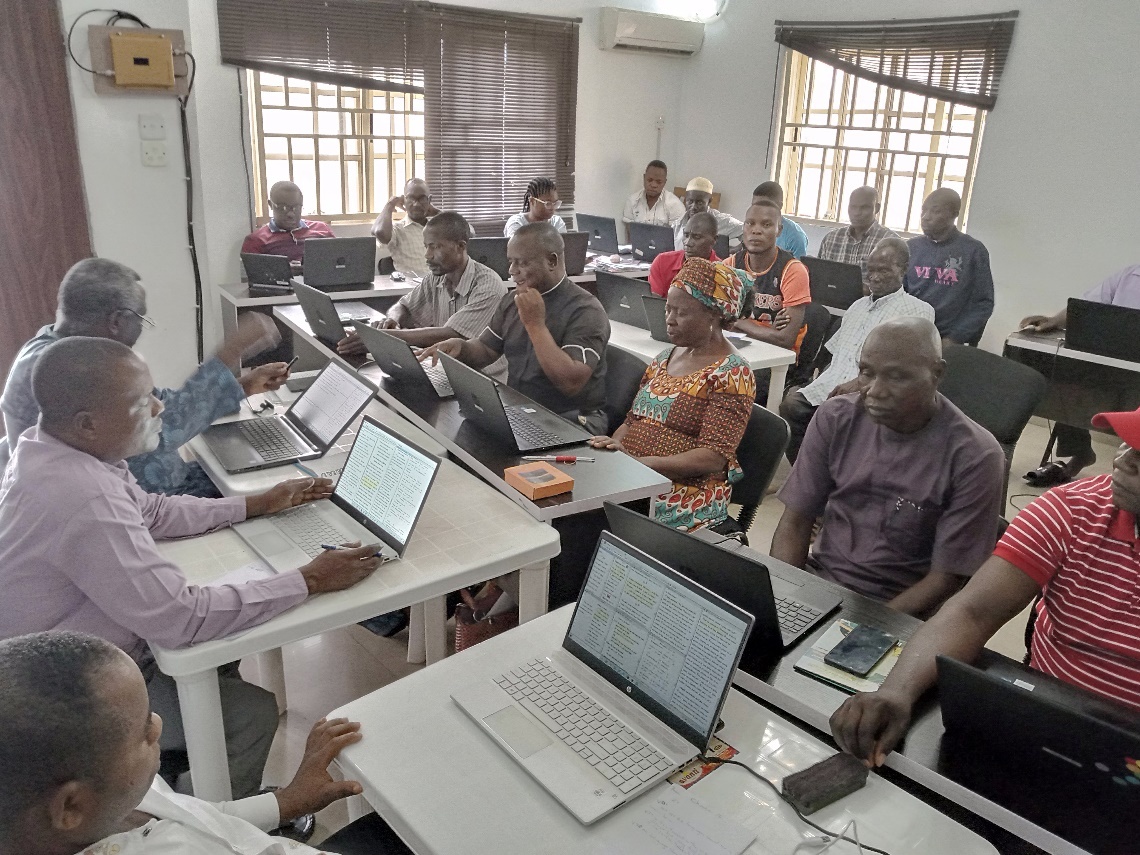
Group consultancy is always a training session. More eyes are on the text than just one expert consultant. The group works together to help give good suggestions for solutions to translation problems. Stronger teams help the weaker teams. There is synergy in the room which keeps everyone active and awake. Teams are encouraged to assess the quality of their own work against their peers in the room. Participants give helpful suggestions of ways they have tackled translation problems, e.g., unknown ideas. They share descriptive phrases or cultural substitutions, etc. that have worked in their translations. A video clip done by the ETEN Quality assurance innovation lab is available here: https://youtu.be/E324qwQoVBM.
The Benefits of Group Consultation to Train CITs
In the context of group consultations, the consultant becomes more like a facilitator and trainer rather than an examiner of the text. The focus is on the translators learning from each other as they assess their translations by comparing their renderings to each other and to the source text as well. The consultant mentors participating CITs by demonstrating how to carry out a consultant check, mainly asking questions which help clarify issues of accuracy and meaningfulness in their translations. Depending on the level of experience of the CIT and their academic training, they are given an opportunity to lead some sessions under the guidance of the consultant. Eventually, after a minimum of four to six sessions, these CITs can do an entire consultation. If they have adequate competence, CITs are encouraged to work independently, and their consultant notes are reviewed by their mentor. At this stage they are termed “local consultants,” working only in languages they are familiar with. After doing four to six consultations independently under the guidance of a mentor, they receive further training and mentoring, and they begin themselves to mentor other CITs. At this stage, they become recognised as national level consultants and can work throughout the country or neighbouring countries which use the same LWC. After working at this level for four to six consultations, they may go on to work as International Consultants. One of the prerequisites to reach this level would be a mentored session in an international setting by an experienced International Consultant to ensure their competency level.
It has been my practice over the past 15 years to refuse to do a consultation unless there is at least one national CIT present. The reason for this is to train nationals to take responsibility for every level of Bible translation in their country. The languages in cluster projects are culturally and linguistically related and thus mutual sharing is possible. Those who speak regional languages or languages of wider communication in the country where the teams are located would be better positioned as quality assurance providers as they are closer to the culture than an expert consultant from outside the area.
Primary Language Speakers Involved at Every Level of Quality Assurance
Primary language speakers are better at assessing quality in their own language than are outsiders. A non-native speaker of a majority language would not be asked to give final approval of a translated text no matter how well educated they are. As an example, an English speaking person, who does not speak German, would not be asked to do a final check on a German Bible translation. Primary speakers of a language have an in-built intuition of the words and grammar of their language which they develop and refine during the many years of language acquisition during childhood.
Accuracy in translation is more than just the words and grammar being correct. It includes cultural nuances, suprasegmental elements of meaning, idiomatic expressions, connotative meaning, etc., which an outsider cannot easily access to assess quality especially if they only use back translations. The challenge of trying to assess quality through a back translation, which is often inadequately prepared, presents a real challenge for the consultant. Although consultants may be experts in the biblical languages and the cultural background of the Bible, a huge amount of time is spent on cross cultural communication problems. The translators may not understand the consultants’ English, and the consultants may not be able to understand theirs either, and this is often the meta-language being used to discuss deep spiritual and scriptural issues. Thus, someone who understands the translators’ language, or a closely related one, as well as having a good knowledge of the biblical languages and scripture would play a major role in providing quality assurance. The suprasegmental issues in language will become even more pronounced in the current move towards Oral Bible Translation as the norm in Bible translation.
Thinking Innovatively About Quality Assurance
The author believes theologically trained church leaders need to be trained and engaged in the quality assurance role in all Bible translation projects. They would need to be trained in a working knowledge of Greek and Hebrew, as well as how to use source language tools in Paratext. The traditional reviewer committee could be a source to find those with the necessary skills, background, and interest to be trained as scripture authentication elders and to take responsibility as mother tongue speakers of the language for quality assurance. Some of these leaders could go on to become trained as consultants to help assure quality in their own language as well as other languages and also train other CITs in those languages.
More emphasis will need to be given to train translators to produce high quality first drafts, as well as to train review teams and scripture authenticators rather than the end stage traditional consultant checking to assure quality. It is the belief of the ETEN quality assurance Innovation Lab members that church leaders, who are primary speakers of the language project, should be trained to replace the activities of a consultant in the role of quality assurance.
A question worth considering is, “How can a non-primary speaker assess the authenticity and the appealing nature of a translation?” And secondly, “How can we as consultants use our time well to equip theologically trained church leaders, who are primary language speakers, to a higher level of competence in the quality assurance of translations which will serve their own language communities better?” I believe through intentional training and mentoring this can be achieved and should be our goal. Chong (2022) emphasizes the need for training and mentoring by asserting that primary language speakers “will still lack the qualifications to provide a quality translation without specialized training in both the target and source languages, combined with a strong familiarity with the given subject.”
In the oral to print approach, a first draft is produced orally, and after a book is completed, community checked, and approved, it is written down. It is the belief of the author that group checking procedures will work well in checking these transcribed texts and ensuring that scriptures are accurate. Back translations could be produced by using the Paratext interlinearizer and checked in groups.
Exciting things are happening worldwide where the church is wanting to take more responsibility for Bible translation among their Bibleless communities. Bible agencies need to work more closely with the church to help equip their members for all aspects of Bible translation.
Innovative ideas will need to be continually developed as we move towards the use of artificial intelligence (AI) where machines can do more translation, possibly even deep learning of a language to do drafting of texts. These texts will then need to be edited and proof-read, and once again can be checked against the original languages of the Bible. The method as described above of quality assurance by a well-trained scripture authentication elder, who is a recognized church leader, as well as a board of higher-level church leaders to review their text possibly using a group consultation setting, could be used to approve the scriptures by the church for wider use. Back translations of translated texts will also be produced more rapidly by AI which will increase the volume of work needing to be checked and group consultation would help to address this need.
Conclusion
Group consultation provides a good opportunity to train CITs, exegetes, and translators through active involvement in the checking process. Group dynamics also help to keep the consultation on track in terms of completing the task on time. Most importantly, the teams themselves take more ownership of the process. A team no longer works in isolation; the stronger teams tend to help the weak ones. With several teams around them in neighboring languages, weaker teams receive help to keep going and stay on track to be ready for the next consultation. A greater sense of belonging to the Bible translation movement occurs in the region and among the churches. Career opportunities arise for each person to develop further, and the church in the region is more united due to shared administration of the projects and hosting of larger groups for checking.
As has been shown from the track record, group consultation has multiple benefits in allowing Bible translation progress to be realized more quickly, leading to lesser costs, and hopefully improved quality and acceptability by the church. Certainly, the profile of Bible translation is raised in areas of cluster activity. Group consultations are also a greenhouse for training national CITs and church leaders to equip them to participate in the task of quality assurance. Well-trained mother tongue speakers who have translated their own NT or full Bible can be trained as consultants and they, in turn, can train and mentor other neighboring language teams in all aspects of Bible translation, as they profit from their own knowledge of the language and culture in a defined area. They can also equip church leaders to become scripture-authenticating elders more rapidly through the group consultation setting.